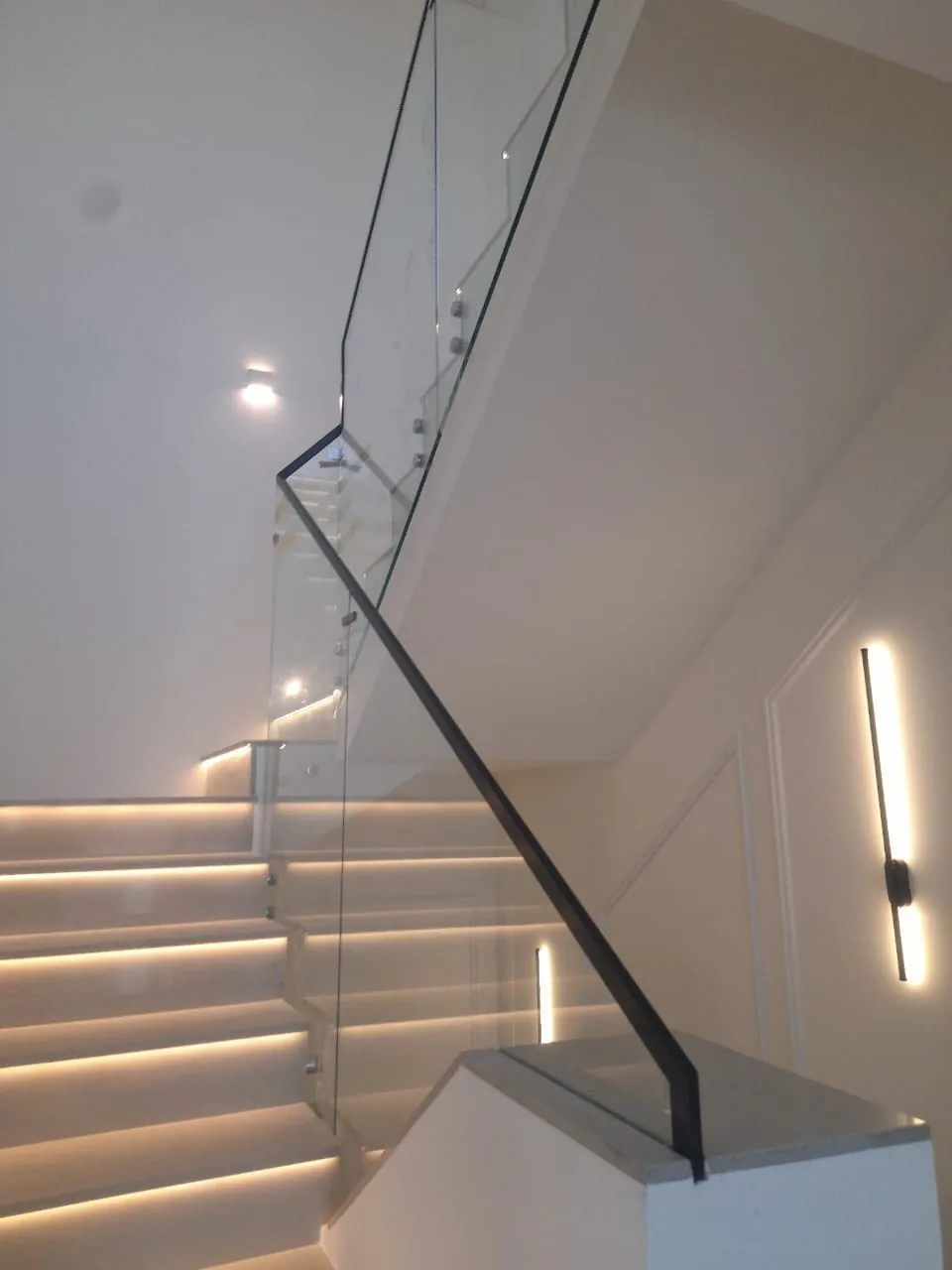
Extra clear glass balustrades use a low-iron glass that removes most of the faint green tint standard clear glass shows, especially on large panels or when the glass is viewed edge-on. "Crystal glass" is a name some suppliers give the same low-iron product rather than a genuinely separate glass type, and knowing that distinction can save you from paying twice for the same upgrade under two different labels.
Why Standard Clear Glass Has a Green Tint
Standard clear glass, also called float glass, contains a small amount of iron oxide as part of its raw material mix. That iron content gives the glass a faint green tint. On a small pane viewed head-on, it's barely noticeable. The tint becomes far more visible on a larger panel, and more visible again when the glass is viewed edge-on, which is exactly the angle most balustrade glass is actually seen from, since a balustrade panel presents its edge to anyone looking along a balcony line, a staircase run, or a pool perimeter.
What Extra Clear (Low-Iron) Glass Changes
Extra clear glass (also called ultra clear or low-iron glass) is manufactured with a much lower iron oxide content. The result is a more neutral, true-colour view through the glass, with the green edge tint largely eliminated. Colours behind the glass read closer to how they'd appear with no glass there at all, which matters most on large uninterrupted runs where a tinted edge would otherwise be a visible band along the top of the panel.
The trade-off is cost. Extra clear glass costs more than standard clear glass to produce, so it's worth specifying where the tint would actually be noticeable, not as a default upgrade on every project.
Is "Crystal Glass" Something Different?
Not usually. "Crystal glass" is a name some glass suppliers use for their own extra clear, low-iron product. It's a branding choice, not a distinct technical glass category sitting between clear and extra clear. If a supplier quotes "crystal glass" as an option, the honest question to ask is what the actual iron content or product specification is, since in most cases it will match a standard extra clear/low-iron product sold under a different name.
Where the Difference Actually Matters
The tint is most worth addressing on large uninterrupted balustrade runs, pool edges viewed from a distance, and any panel seen mostly edge-on rather than face-on, situations where a green cast along the top edge would be a visible, permanent feature of the view. For smaller panels, such as a short flight of interior stairs or a compact balcony infill, standard clear glass is perfectly adequate, and most people would not notice the difference without the two side by side. For larger runs where the tint does become visible, we specify the glass on site in Dubai before anything is ordered.