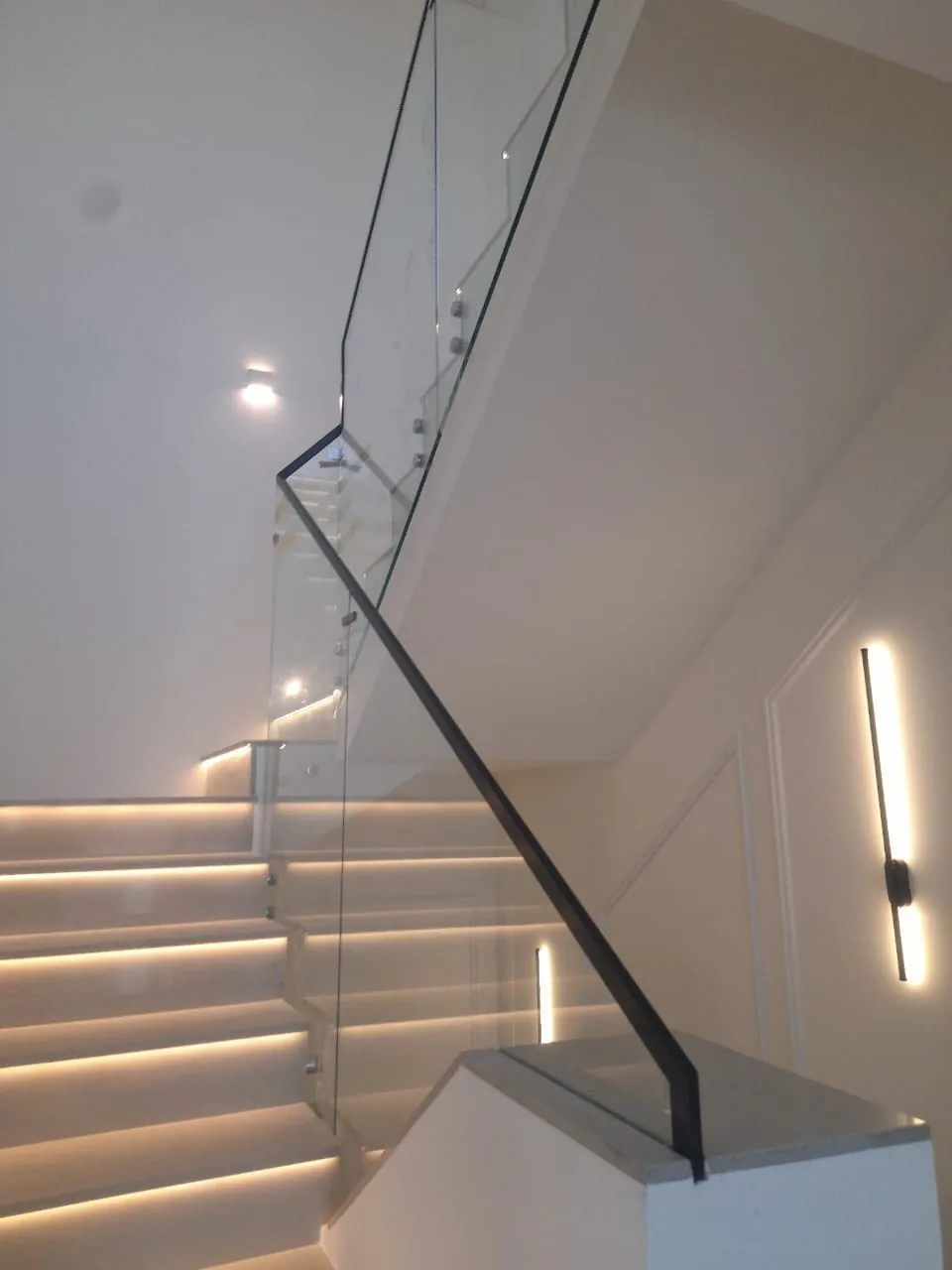
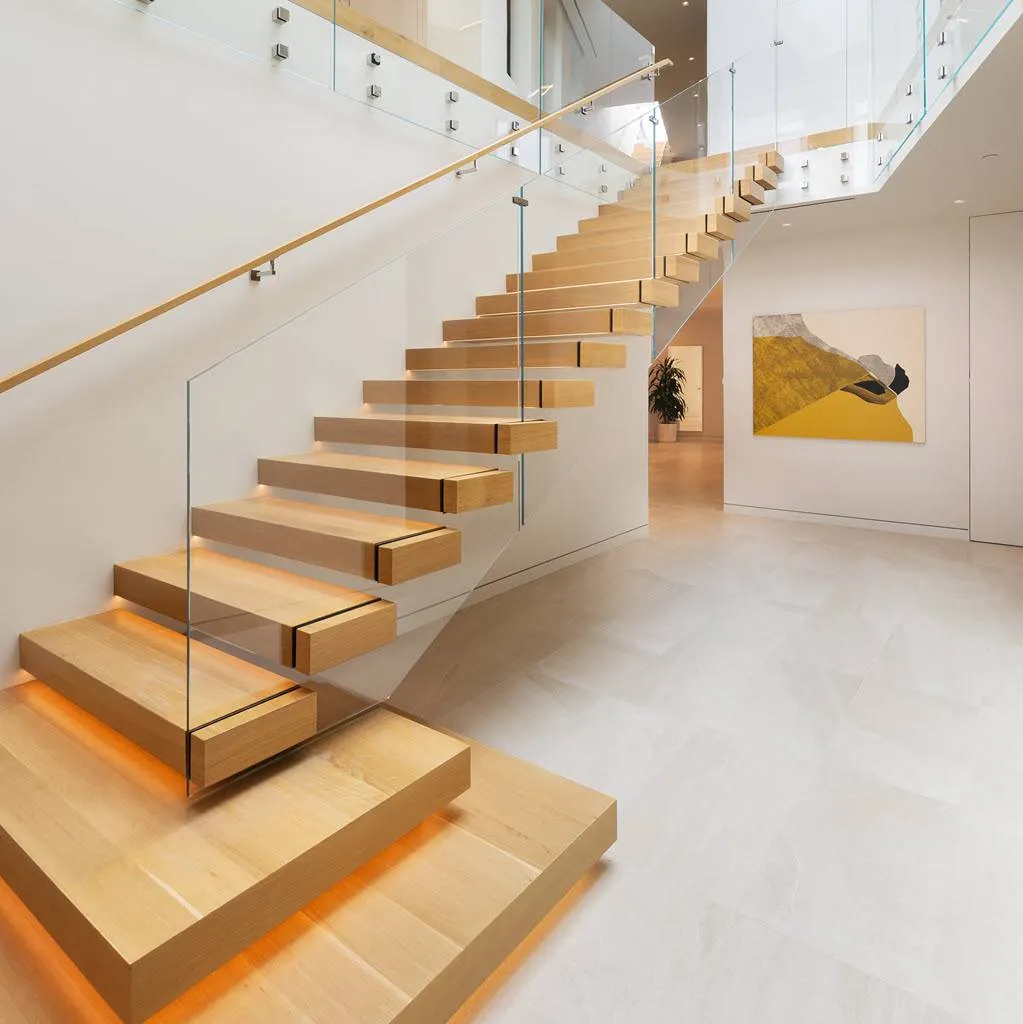
Laminated glass balustrades are built from two or more panes of toughened glass bonded together with a plastic interlayer, so the assembly stays in one piece even if the glass itself cracks. For UAE balustrades (staircases, balconies, and pool edges) the interlayer material and the overall glass thickness are the two decisions that actually determine how the panel performs, and both get specified differently depending on the height, span, and whether the design is framed or frameless.
What Is Laminated Glass?
Laminated glass is made by bonding two (or more) panes of toughened glass together with an interlayer, using heat and pressure so the layers fuse into a single panel. The interlayer is what changes the panel's behaviour if it's ever struck hard enough to crack: instead of the pane breaking apart, the interlayer holds the fragments in place and the panel stays in the opening.
That property is exactly what a balustrade needs. A barrier at a stair, balcony, or pool edge has to stay standing after an impact, not just resist one, which is why laminated glass, rather than single-layer toughened glass alone, is the standard specification for most UAE balustrade applications.
PVB vs SGP: The Two Interlayer Types
PVB (polyvinyl butyral) is the interlayer used in the large majority of laminated balustrade glass. It's a well-proven, cost-effective material that performs reliably in standard residential and light commercial applications, post-fixed panels, framed systems, and shorter spans between fixings.
SGP (ionoplast, sometimes sold under the brand name SentryGlas) is a stiffer interlayer, engineered specifically for structural glass work. It holds its shape far better under load than PVB, which means less deflection (bending) in the panel and stronger edge performance where the glass meets its fixings. That extra rigidity is what makes SGP the choice for larger unsupported panels, taller frameless balustrades, or any application where the glass itself is doing more of the structural work rather than leaning on a surrounding frame.
Both interlayers meet the same fundamental safety function (holding broken glass in place) the difference is purely one of structural stiffness and how large or exposed a panel can be before it needs the extra performance SGP provides.
Standard Thickness Build-Ups for UAE Balustrades
Laminated glass thickness is described as a build-up: the two glass layers plus the interlayer, added together. Three build-ups cover most UAE balustrade work:
- 10.76mm, two 5mm toughened panes plus a 0.76mm interlayer. The lightest standard laminated build-up, used for lower balconies and framed or post-fixed applications with a top rail.
- 13.52mm, two 6mm toughened panes plus a thicker interlayer. A step up in stiffness, common for taller balustrades and staircases.
- 17.52mm, two 8mm toughened panes plus interlayer. Used for larger panels, greater barrier heights, or frameless designs where the glass has no top rail to share the structural load.
These aren't arbitrary numbers. They're the industry's standard nominal thicknesses, so glass ordered at 13.52mm from one fabricator matches 13.52mm from another. The right build-up for a given project depends on the barrier height required, the distance between fixing points, and whether the design is framed or frameless.
Choosing the Right Build-Up for Your Project
Diamond Step® specifies a minimum of 12mm toughened or 13.52mm toughened-laminated safety glass on standard UAE balustrade installations, stepping up in thickness or moving to an SGP interlayer where the span, height, or frameless design demands it. A short, post-fixed balcony panel and a tall, unsupported pool-edge run are not the same engineering problem, even if both are called "a glass balustrade", which is why thickness and interlayer type are confirmed during the site visit, not guessed at from a brochure.
Every project is measured on site, engineered to the correct build-up for that specific application, fabricated in our own Sharjah workshop, and installed by our own in-house team, with a workmanship warranty on the finished installation. The same build-ups are available through our laminated balustrade installation in Dubai.