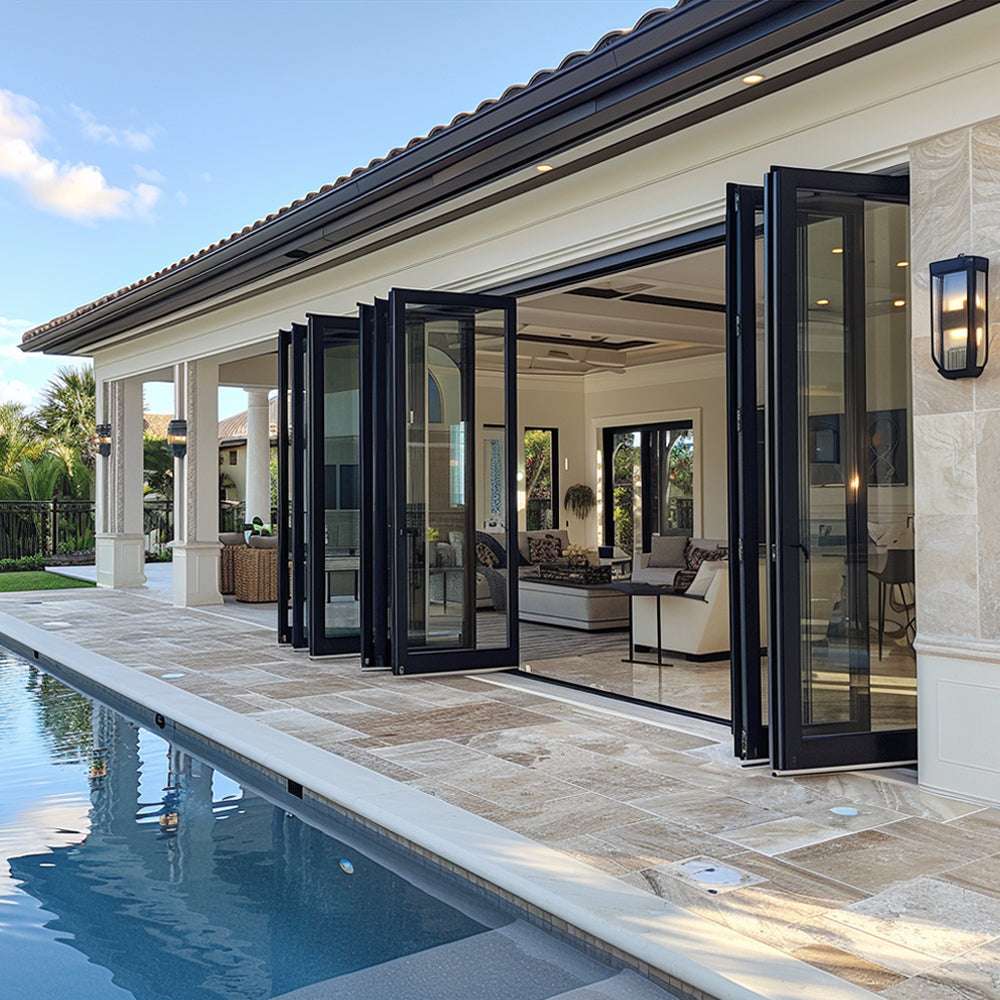
Not always. Top-hung bifolding systems carry the full weight of the door panels on an overhead track, which allows a flush, low-profile, or track-free threshold at floor level. Whether a floor track is needed on a specific installation comes down to the panel count, the total weight, and what the structure above the opening can carry.
Top-Hung Bifolding Doors and Flush Thresholds
A top-hung bifolding door system carries the full weight of the panels on an overhead track fixed into the head of the opening, rather than on a track running along the floor. This removes the need for a floor track and allows a flush, low-profile, or fully track-free threshold at floor level.
A flush threshold is useful wherever a flat, step-free transition between indoor and outdoor flooring matters. A villa terrace opening onto a garden or pool deck is the most common example, where a raised track would otherwise create a trip hazard and break the visual line between inside and outside.
When a Floor Track Is Still Recommended
Bottom-rolling systems use a floor track that helps carry the weight of the panels and reduces the load placed on the head track and the lintel above the opening. For very large or heavy panel configurations, this is generally the preferred approach, the floor track shares the structural load rather than putting all of it on the overhead fixing.
Choosing Between the Two
The right choice depends on the total panel count and weight, and on whether the structure above the opening can carry a fully top-hung load without a supporting floor track. Diamond Step® assesses the opening and the panel configuration on a free site visit before recommending top-hung or bottom-rolling, rather than defaulting to one system regardless of the opening.