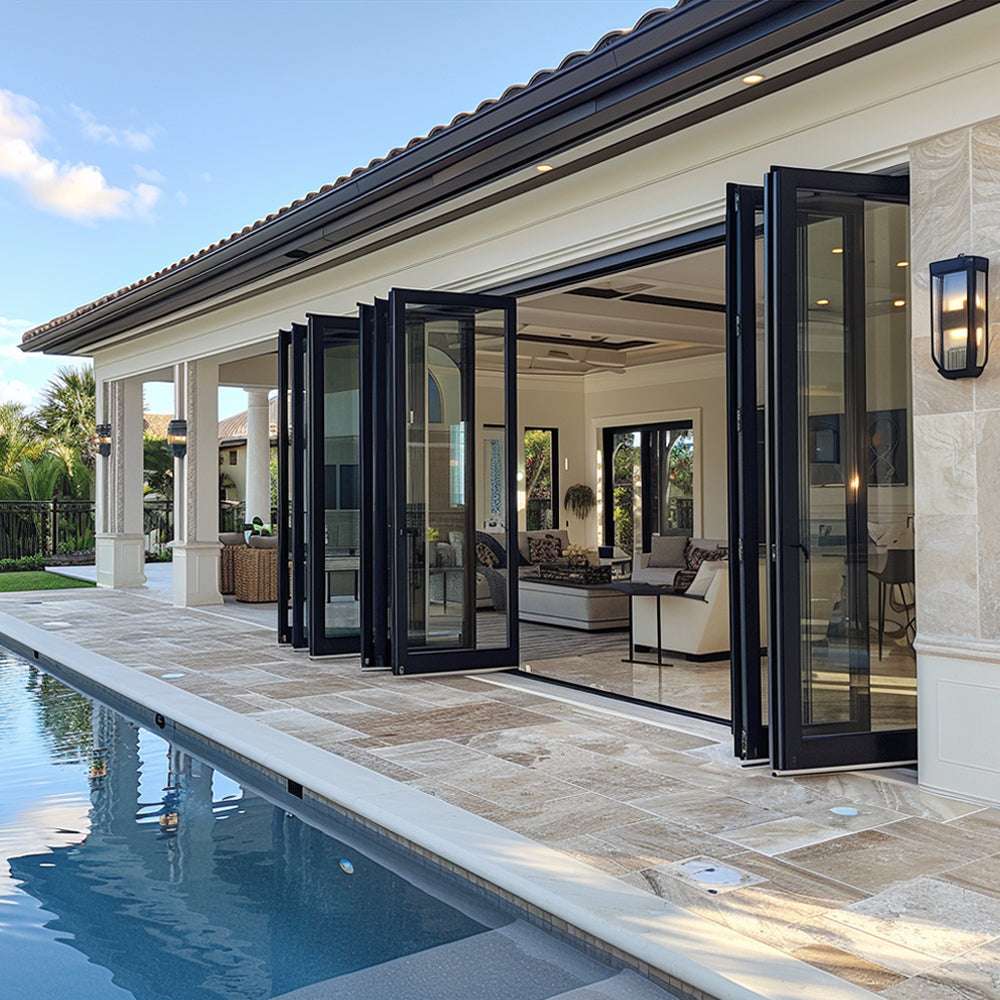
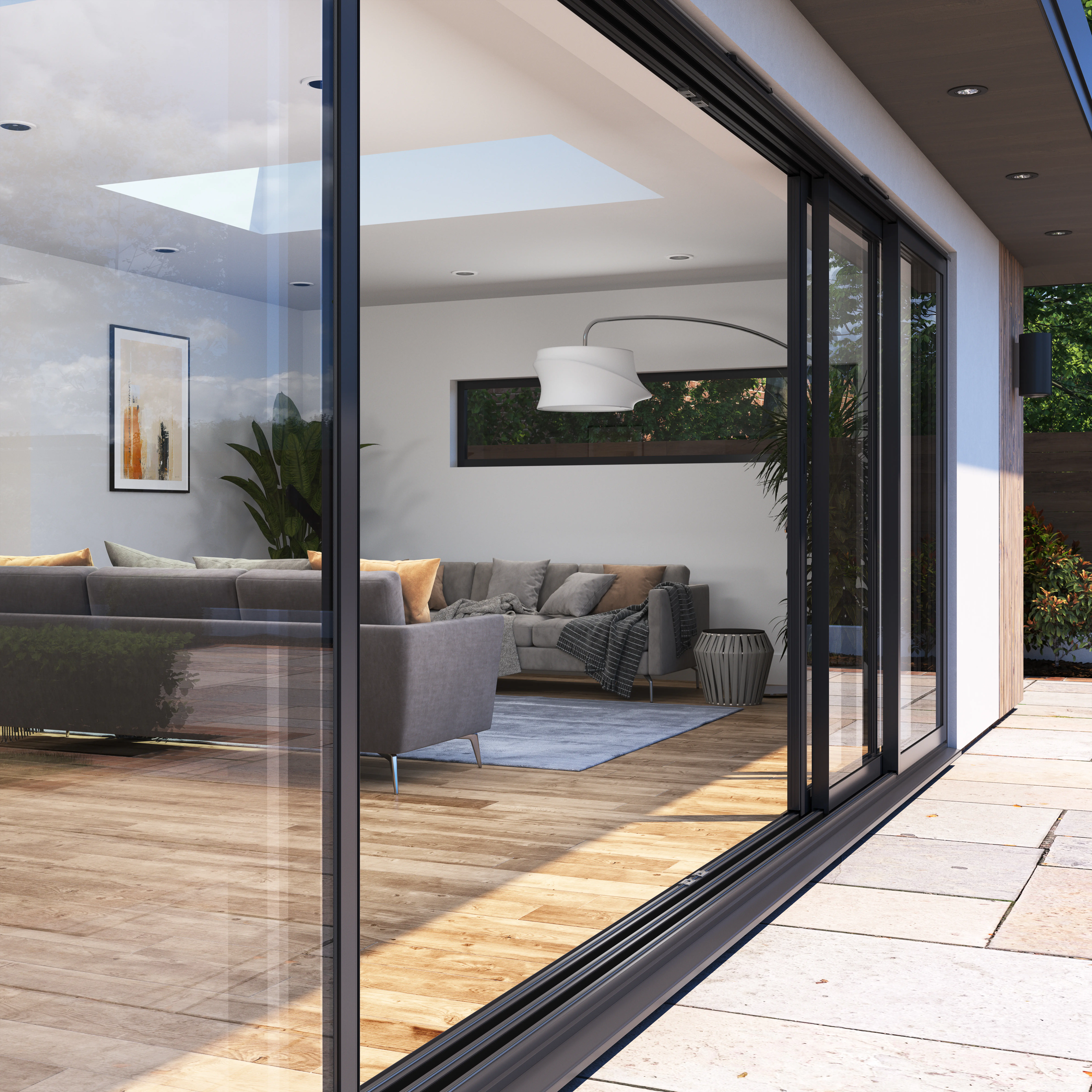
Bifolding doors work by linking a series of glazed panels with hinges, running the whole assembly on a track so each panel folds flat against its neighbour and the folded stack slides to one or both sides of the opening. It's a simple idea mechanically, but the hardware doing the work (track, rollers, hinges, and locking) is what determines whether a bifold door still glides smoothly after five years of UAE heat and dust, or starts sticking within one.
The Core Mechanism
Each glass panel in a bifolding door is connected to its neighbour by a hinge, forming a concertina that folds as the door opens. A carrier wheel or roller sits at the top of each panel (or, on some systems, the bottom) and runs inside a fixed track. As you push the leading panel, each hinge folds in sequence and the whole folded stack travels along the track to the side of the opening.
Top-Hung vs. Bottom-Rolling Systems
Most modern bifolding systems used on UAE villas are top-hung: the full weight of the glass and aluminium panels is carried by rollers in a track fixed to the head (the top of the opening), with a shallow floor guide underneath purely for stability, not weight-bearing. This keeps the threshold low, close to flush, which matters when the door opens onto a pool deck or terrace where a raised track becomes a trip hazard.
Older or budget systems sometimes use bottom-rolling tracks instead, where the panels' weight runs on a track set into the floor. These need a visible floor track and tend to collect more dust and sand in Gulf conditions, which is one reason top-hung has become the standard specification here.
The Hardware That Actually Matters
- Rollers, stainless steel rollers resist the fine dust that works its way into hardware in the UAE; cheaper composite rollers wear faster under the same conditions.
- Multi-point locking, the lead panel typically locks into the frame at several points along its height, not just at handle height, which keeps a wide folded door assembly secure and weathertight.
- Hinges. Sized to the panel weight; undersized hinges are the most common cause of a bifold door that starts to sag or drag after a year or two of daily use.
Diamond Step fabricates bifolding door panels and hardware assemblies in-house, sized to the specific opening and panel count rather than a fixed off-the-shelf configuration, typically 2 to 8 panels for a residential opening, opening to one side or split to both.