Aluminium bifolding doors fold flat and stack to one or both sides, turning a solid wall into a fully open connection between a living room and a garden, pool terrace or outdoor kitchen. They are the single most popular home upgrade we install across UAE villas. In a climate where outdoor living is possible for eight months of the year, bifolding doors in Dubai and the UAE are far more than an aesthetic choice.
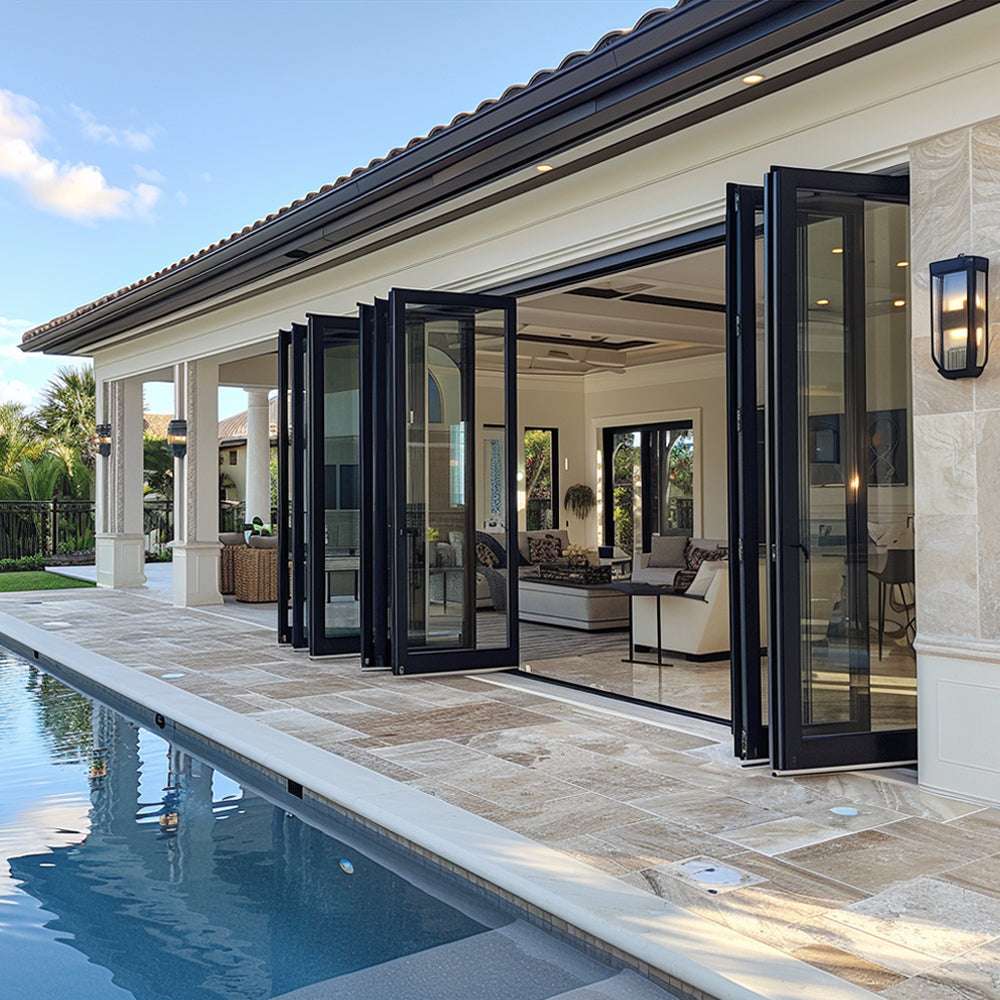
Aluminium bifolding doors folded fully open, a seamless connection between living room and pool terrace.
How Aluminium Bifolding Doors Work
Each panel in a bifold door system is hinged to its neighbour and runs on a top track (top-hung) or bottom track (bottom-rolling). When opened, the panels fold accordion-style against each other and stack at one or both ends of the opening, leaving the full width clear: no centre post, no sliding track underfoot, no obstruction.
Top-hung systems are the preferred choice in the UAE because they leave the floor threshold completely flush, which matters when a villa's interior tiles run straight out to a pool terrace or outdoor paving at the same level. There's no lip or track to catch a foot on the way through.
Panel Configurations
- 2-panel, small openings up to 2m wide. Both panels fold to one side.
- 3-panel, most popular for openings of 2.4m–3.6m. Folds to one side.
- 4-panel, two panels each side. Suits openings of 3.2m–4.8m. Symmetrical, elegant.
- 5, 6, 7-panel, for large villa living room openings of 5m–8m+. Creates a truly wall-less experience.
Thermal Performance: Critical in the UAE
All bifolding doors in the UAE should be specified with a thermal break aluminium profile and double glazed units, ideally with a Low-E coating. Without a thermal break, the aluminium frame conducts heat straight through from outside to inside, working directly against your air conditioning. In UAE summer, an uninsulated bifold system will radiate noticeable heat into the room even with the doors fully closed.
Brush pile weather seals along every panel edge matter just as much. They keep out both the hot air infiltration and the fine dust that UAE shamal winds carry, which otherwise finds its way through even a well-fitted door over time.
Glass Options for Bifolding Doors
- Clear double glazed (4–12–4mm), standard, excellent visibility
- Low-E double glazed, recommended for south and west-facing openings in the UAE. Blocks 60–70% of solar heat gain while staying visually clear
- Tinted glass. Reduces glare, adds privacy from outside during daylight
- Frosted or satin glass, for partial privacy without blocking light
Frequently Asked Questions
Bifolding Doors vs Sliding Doors: Key Differences
Both systems open up living space, but they work differently and suit different situations. A bifolding door folds accordion-style and stacks at one or both ends of the opening, clearing the full width. A sliding door glides on a track, typically clearing 50 to 67% of the total opening while the remaining panels stack behind each other. For UAE villas where the goal is to remove the indoor-outdoor boundary entirely on a cool winter evening, bifolding doors give the more dramatic result. For a pool area where two large panels are enough, a sliding system is often the more practical and more cost-effective choice per square metre.
On floor threshold, top-hung bifolding systems leave a completely flush floor, which is one reason they are preferred in UAE villas where interior tiles and exterior paving sit at the same level. Sliding systems can also achieve a flush recessed track, but that adds cost and calls for careful waterproofing design. Hardware complexity runs higher on bifolding systems too, more hinges, more pivot points, and multi-point locking on every panel, which adds up in both fabrication cost and long-term maintenance. For openings above 6 metres, a 6- or 7-panel bifolding system is usually more practical than a sliding system that would otherwise need very wide individual panels.
The Bifolding Door Installation Process
Knowing what happens at each stage helps you plan the project and coordinate with other trades on site. Here is how Diamond Step approaches every bifolding door installation:
- Site survey and structural assessment. We visit your property, measure the opening precisely, and assess the lintel above. If you want to widen an existing opening, we advise on the structural work required before we can proceed with the door installation.
- Design confirmation. Panel count, track type (top-hung is standard), glass specification, powder coat colour, and hardware finish are confirmed. A technical drawing is produced for your records.
- Fabrication. All aluminium sections are cut, joined, and assembled in our UAE workshop. Glass is cut and tempered to exact opening dimensions. Lead time from order to ready-for-installation is typically 7 to 14 working days for residential projects.
- Installation. The track is fixed to the structural lintel first. The door frame is set and levelled. Each panel is hung on the track, then adjusted for precise alignment and smooth operation. Weather seals, drainage channels, and locking hardware are fitted and tested before we leave.
- Handover. We walk you through the operation, show you how to lubricate and clean the tracks, and provide written documentation of the system installed. Every Diamond Step installation includes a workmanship warranty.
Most residential bifolding door installations wrap up in one to two days on site. Where structural work is needed to widen the opening, that phase is coordinated separately and quoted with its own clear timeline before installation begins.
Maintaining Bifolding Doors in the UAE
UAE conditions are harder on external door systems than a temperate climate, dust storms, sustained high heat, and coastal humidity in some emirates all take a toll on hardware and seals over time. A few straightforward habits keep a bifolding door operating smoothly for decades:
- Track cleaning, clean the bottom track every month during the dusty season (June to September). Accumulated sand causes premature wear on rollers and can cause panels to stick. Use a stiff brush followed by a damp cloth.
- Roller lubrication, apply a silicone-based lubricant to rollers and hinges twice a year. Avoid oil-based lubricants, which attract dust and create a grimy build-up in the track.
- Seal inspection. Check the brush pile seals along each panel edge once a year. Compressed or torn seals allow dust ingress and reduce the thermal performance of the system. Replacement seals are inexpensive.
- Glass cleaning, clean with a mild detergent solution and a squeegee. For Low-E glass, avoid abrasive cleaners or scouring pads, which can damage the metallic coating on the glass surface.
- Hardware inspection, tighten all visible fixings annually. UAE shamal (north-westerly wind) events create sustained vibration that can loosen screws in the handle plates and locking points over time.
Permits for Bifolding Doors in the UAE
Whether a building permit is required depends entirely on the scope of the work:
- Replacing an existing door or window with a bifolding door of the same size: no permit is typically required in any UAE emirate. You are not changing the opening, only the product that fills it.
- Widening an existing opening, a structural modification. This requires a permit from the relevant authority: Dubai Municipality, the Abu Dhabi Department of Municipal and Transport (ADMT), the Sharjah Building Control Department (SBCD), or the equivalent in your emirate. Diamond Step provides technical drawings for your submission.
- Creating a new opening in an external wall, full structural engineer certification and permit required before any demolition work begins. We can advise on the process and connect you with engineers who work regularly with our projects.
If you are ever unsure, we will advise during the free site visit. Having completed projects across all seven emirates, we know the approval process in each and can tell you early whether a permit applies to your project.