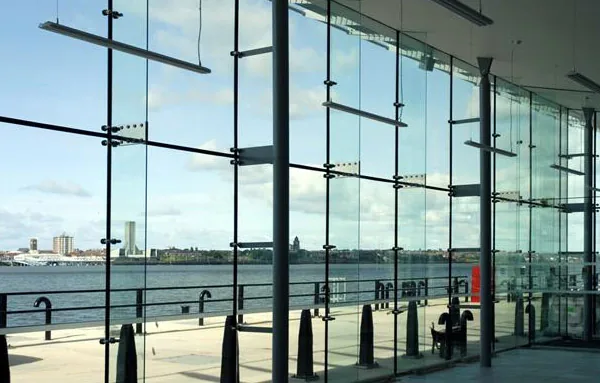
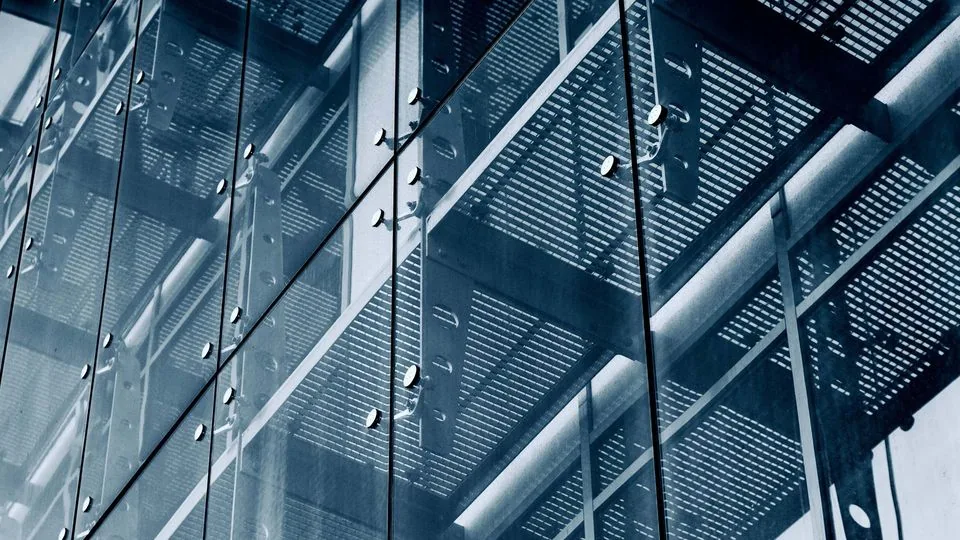
Spider glass and curtain wall both create large glass facades, but they get there in opposite ways. Spider glass is frameless and point-fixed, while curtain wall holds its glass inside a full aluminium frame. Which one suits a project depends on scale and how transparent the facade needs to look, not on one being an upgrade over the other.
How Each System Is Fixed
Spider glass uses point-fixed steel or stainless-steel "spider" fittings at the corners of each glass panel, with no visible frame around the glass at all. The structural support comes from a small number of discrete fixing points rather than a continuous frame running around every panel.
Curtain wall systems, whether stick or unitised, hold glass within a full aluminium frame grid. That frame carries the structural and weatherproofing load across the whole facade, rather than at isolated points the way spider glass does.
Where Each One Is Typically Used
Because spider glass has no frame, it creates the most transparent, minimal-sightline facade of the two. It's commonly used for feature entrances, atriums, and shopfronts rather than full building envelopes.
Curtain wall is the more common choice for large-scale commercial and high-rise facades. The framed system is better suited to covering large continuous areas efficiently and managing thermal and structural movement across a tall building.
Both are structural glazing systems Diamond Step designs and fabricates in-house, and the right choice depends on the scale and visual goal of the project.