A curtain wall is a non-structural glazed outer skin that carries only its own weight, transferring wind and facade loads back to the building's primary structure. It is the defining visual element of modern commercial architecture in the UAE: the glass towers lining Sheikh Zayed Road, the DIFC skyline and Abu Dhabi's Corniche are all clad in curtain wall systems. This guide explains how curtain wall systems work in the UAE, the main system types in use here, and what to expect from a properly engineered installation.
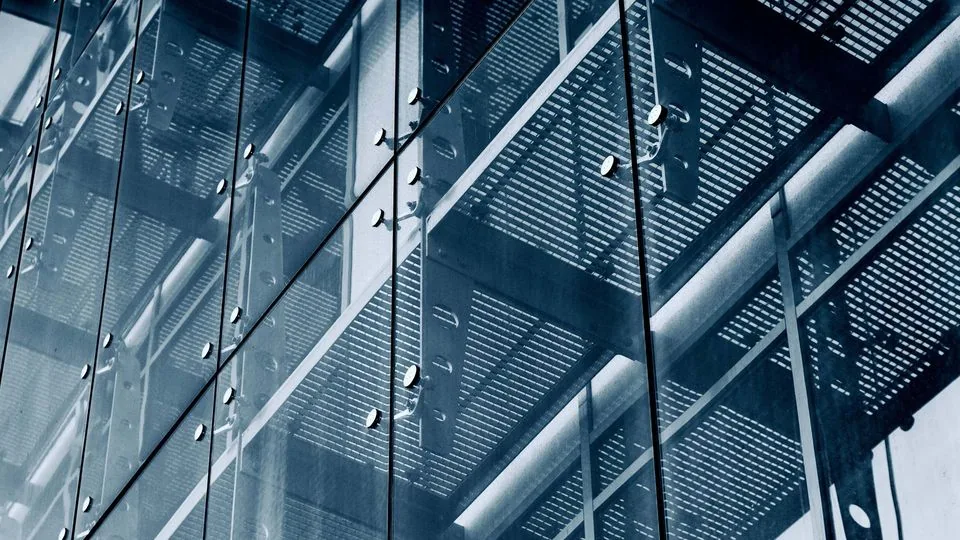
A unitised curtain wall system, factory-assembled panels delivering precision and speed on UAE commercial projects.
What is a Curtain Wall System?
A curtain wall is a lightweight facade system (typically aluminium framing and glass), that hangs in front of the building's structural frame rather than supporting it. Its job is to keep weather out, let light in, provide thermal and acoustic insulation, and set the visual identity of the building from the street. The aluminium mullions (vertical members) and transoms (horizontal members) form a grid, and glass or opaque panels fill the infill areas between them.
Curtain Wall System Types
Stick Curtain Wall
All components (mullions, transoms, glass) are shipped to site individually and assembled in place. It is the most flexible system and the most common choice for low-to-mid rise buildings in the UAE, under roughly 20 storeys, because it allows on-site adjustment as the building progresses. The trade-off is a slower installation that is more exposed to weather delays than a unitised system.
Unitised (Pre-Assembled) Curtain Wall
Full storey-height panels are factory-assembled and glazed, then delivered to site and clipped to cast-in anchors on the structural slab edge. Installation is faster, factory quality control is tighter, and weather performance is stronger once installed, which is why unitised is the standard choice for tall commercial buildings in Dubai and Abu Dhabi. The upfront cost runs higher, but site labour cost drops in return.
Structural Glazing (Silicone Bonded)
Glass panels are bonded to the aluminium frame using structural silicone sealant rather than mechanical glazing beads. The result is a flush exterior face with no visible metal frame lines, just glass, edge to edge. It's the system of choice for premium commercial buildings and luxury hospitality projects across the UAE, wherever the brief calls for a seamless, all-glass appearance.
Point-Fixed (Spider Glass) Facade
Glass panels are supported by individual metal spider fittings at each corner, with no aluminium frame at all, the most minimal and dramatic appearance of the four systems. See our separate guide on Spider Glass Systems in UAE for how these facades are engineered.
Performance Requirements for UAE Curtain Walls
The UAE climate places specific demands on curtain wall systems that a European or Asian specification would not need to account for:
- Solar control. Low-E coated double glazed units are the minimum standard. The Solar Heat Gain Coefficient (SHGC) should not exceed 0.25–0.30 for east, south, and west-facing facades in UAE
- Wind resistance. Dubai and Abu Dhabi have strong prevailing winds and occasional shamal events. Curtain wall systems are tested to UAE wind load requirements under ASCE 7 or equivalent standards
- Sand and dust infiltration. All joints must be fully sealed against UAE dust storms
- Thermal expansion, aluminium expands significantly in UAE temperatures. Curtain wall systems must accommodate differential movement between panels and structure
Frequently Asked Questions
The Design and Engineering Process
A curtain wall project moves through several well-defined engineering stages before a single panel reaches the building site. Knowing this sequence helps developers, project managers, and main contractors set a realistic programme from the outset:
- Tender and value engineering, the facade contractor (Diamond Step) reviews the architect's facade drawings, proposes a system type, and prices the work. Value engineering discussions typically cover glass specification, system profile, and the boundary between the curtain wall scope and other facade elements.
- Shop drawing production. Detailed fabrication and installation drawings are produced by the facade contractor's engineering team. These are submitted to the main contractor and the architect/facade consultant for review and approval. Multiple revision rounds are normal before drawings reach "Approved for Construction" status.
- Engineering calculations, structural calculations confirm that the curtain wall system can resist the design wind loads for the building location, height, and exposure. UAE wind loads are governed by UAE National Annex to Eurocode 1 or ASCE 7, depending on the authority having jurisdiction.
- Mock-up and testing, large commercial projects typically require a full-size mock-up panel to be tested for air infiltration, water penetration, and structural performance to ASTM or EN standards before mass production begins. This is a mandatory step on most UAE government and large commercial projects.
- Fabrication. Aluminium sections are extruded to profile, cut, machined, assembled, and glazed in the factory. For unitised systems, complete storey-height panels leave the factory ready to install. Factory lead times from approved shop drawings are typically 12 to 20 weeks.
- Installation and snagging, on-site installation, followed by systematic snagging inspection of every panel and joint by the facade contractor and the consultant's representative before final handover.
UAE Compliance: Testing, Certification, and Approvals
Curtain wall systems in the UAE sit under regulatory requirements that vary by emirate and by project type:
- Dubai Municipality. All commercial building facades in Dubai must comply with the Dubai Green Building Regulations and Specifications (DGBRS). Key requirements include maximum Solar Heat Gain Coefficient (SHGC) values for glazing and minimum Window-to-Wall Ratio (WWR) limits depending on building orientation. Diamond Step prepares energy compliance documentation as part of the shop drawing package.
- Abu Dhabi. Commercial buildings in Abu Dhabi are subject to the Abu Dhabi International Building Code (ADIBC) and Estidama Pearl Building Rating System requirements for new commercial construction. Pearl-rated projects specify enhanced glazing performance values.
- Free zones. DIFC, ADGM, JAFZA, and other UAE free zones have their own construction approval processes. Facade installation in free zones must be approved by the free zone authority in addition to the relevant emirate municipality.
- Fire rating, UAE fire regulations (Dubai Civil Defence, Abu Dhabi Civil Defence) impose requirements on curtain wall systems at fire compartment boundaries and at floor slab interfaces. Fire stopping at the slab edge is a critical detail that must be designed and installed to a tested and approved specification.
Curtain Wall Maintenance
Even a well-installed curtain wall needs periodic maintenance to stay weather-tight and visually sharp over its service life. In the UAE climate, the following activities are not optional extras. They are what keeps the facade performing as designed:
- Facade inspection, annual visual inspection from a rope access or building maintenance unit (BMU) identifies failed sealant joints, cracked glass units, and loose fixings before they become water ingress or safety problems.
- Sealant replacement. Structural and weather silicone sealants have a service life of 20 to 25 years. UAE UV exposure and thermal cycling (extreme heat, occasional cold) accelerates sealant degradation. Selective resealing of failed joints is a routine maintenance activity on buildings over 10 years old.
- Glass unit replacement, double-glazed units occasionally fail at the edge seal, causing fogging or condensation between the panes. Replacement of individual failed units can be carried out from inside the building in many curtain wall system types, avoiding the need for full external access.
- Cleaning, UAE dust storms deposit significant material on glass facades. Most commercial buildings have scheduled external cleaning programmes. Improper cleaning tools (abrasive pads, metal scrapers) can permanently scratch solar control glass coatings.
Working with Diamond Step on a Curtain Wall Project
Diamond Step operates as a specialist facade subcontractor, working directly with main contractors, project managers, and developers on commercial curtain wall projects across the UAE. Here is what that working relationship looks like in practice:
At tender stage, we return a detailed bill of quantities, system specification, and preliminary programme based on the architectural drawings, and we will flag alternative system configurations where they meet the design intent while reducing cost or shortening the construction programme. Once the contract is awarded, we provide a full insurance package, a project-specific quality plan, and a health and safety method statement before any work begins on site.
During design development, our engineering team coordinates directly with the facade consultant and the project's MEP engineers to resolve interface details at penetrations, structural movement joints, and the slab edge, the details that cause the most disputes if left unresolved. All shop drawings go through the project's document control system, and we maintain a drawing register for the life of the project.
On site, every installation is carried out by Diamond Step's own employed workforce. We do not subcontract curtain wall installation. Our site supervisor keeps a daily installation log and photographic record of every bay fitted, with inspection and test records maintained for the full duration of the project.
Send us your project drawings and programme and we will return a competitive tender submission.