Glass partitions divide a floor plan without blocking light, and come in framed, frameless, single-glazed, acoustic double-glazed and switchable versions. They have changed how offices and homes get designed across the UAE. Instead of solid walls that carve a floor plan into isolated pockets, glass partition systems in Dubai define separate spaces while keeping the environment open, bright and connected. From boardrooms in DIFC to home offices in Jumeirah, they are one of the interior upgrades we install most at Diamond Step®.
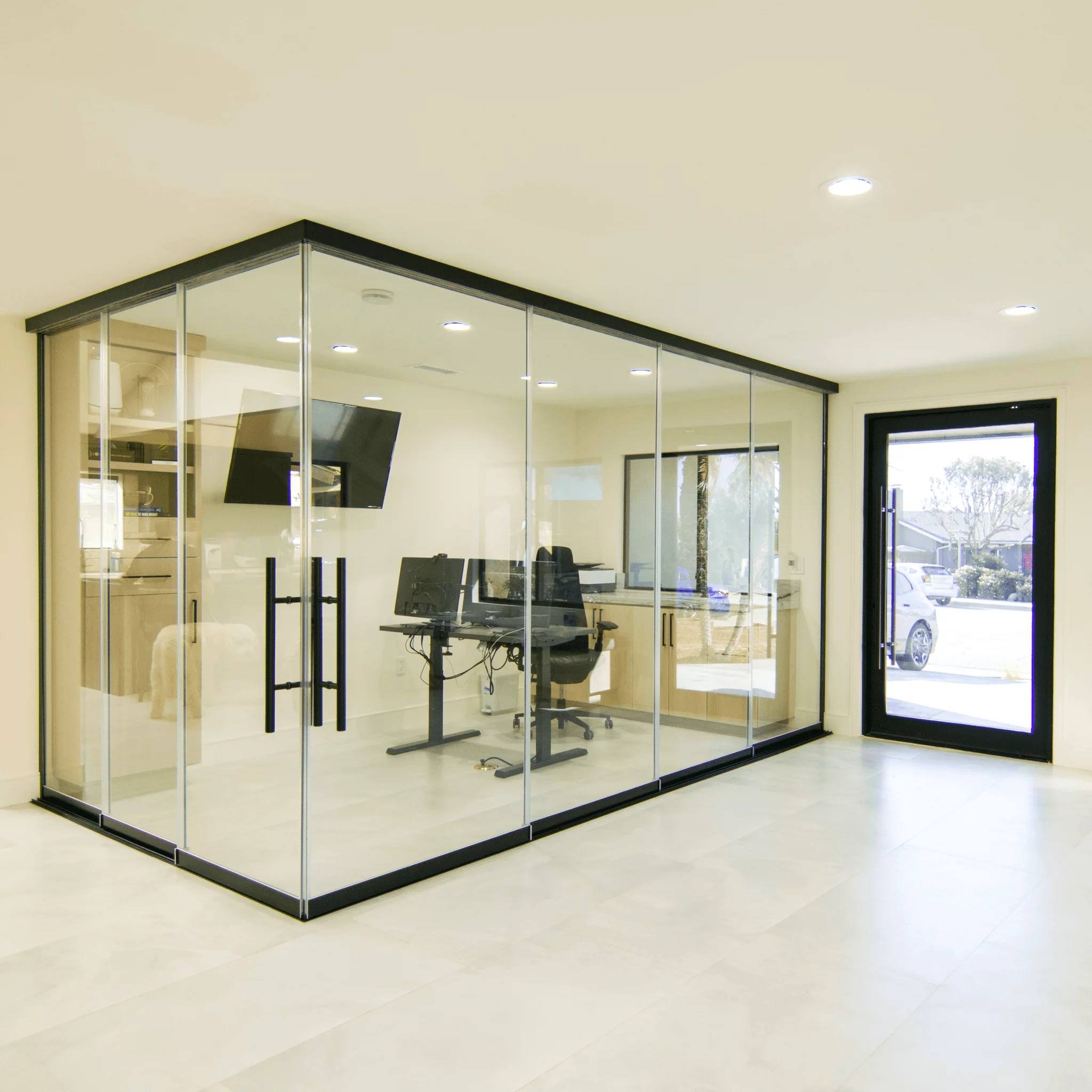
Frameless glass partitions create defined spaces while keeping the office open, bright, and collaborative.
Types of Glass Partition Systems
Framed Aluminium Partition
Aluminium stiles and rails hold the glass panels in place, and the frame's structural support means thinner glass (8mm) can be used, which makes this the most cost-effective option of the four. It's available in powder-coated aluminium in any RAL colour, though silver, black, and white cover most UAE office fit-outs.
Frameless Glass Partition
10mm or 12mm toughened glass panels held by top and bottom channels only, with no visible side frames, for a clean, almost invisible finish. It's the premium choice for luxury home renovations and high-end commercial fit-outs across Dubai's financial and business districts.
Double-Glazed Acoustic Partition
Two glass panels with an air cavity between them, built the same way as a double-glazed window, deliver significantly better sound insulation, Rw 40–55 dB, against Rw 28–35 dB for a single-glazed partition. We specify it for private offices, boardrooms, HR areas, and any meeting room where confidentiality matters.
Switchable Smart Glass Partition
Glass that switches from transparent to frosted at the flick of a switch, or from a phone app, for spaces that need privacy on demand rather than permanently frosted glass. We fit it most in meeting rooms, private offices, and healthcare spaces across the UAE.
Glass Partitions in UAE: Common Applications
- Open plan offices, create meeting rooms, focus zones, and director offices without full solid walls
- Reception areas, define the reception from the main office while keeping it visible and welcoming
- Home offices, partition a study or workspace from a living room or bedroom in UAE villas and apartments
- Retail spaces, create premium displays, VIP areas, or back office separation in shops and showrooms
- Healthcare clinics, consultation rooms, pharmacy counters, waiting area dividers
Acoustic Performance: What to Expect
Sound insulation is the most commonly misunderstood part of specifying a glass partition. A single-glazed 10mm partition cuts noise by around 30–35 dB, enough to turn a clearly audible conversation into a murmur. A double-glazed acoustic partition achieves a 42–52 dB reduction, which is sufficient for a private office in most UAE office environments.
For genuinely confidential spaces (legal, HR, medical) specify acoustic laminated glass, and make sure every joint, door seal, and ceiling or floor interface is properly detailed. A partition is only as quiet as its weakest gap.
Frequently Asked Questions
Demountable vs Fixed Glass Partition Systems
One of the most consequential decisions for commercial clients is whether to install a fixed or demountable partition system, and the distinction matters far more in leased UAE office spaces than it first appears:
- Fixed partitions, structurally bonded or mechanically fixed to the floor slab and ceiling. Cannot be relocated without damage to the building fabric. More appropriate for owner-occupied spaces or where the partition layout is permanent. Generally lower cost per square metre and better acoustic performance.
- Demountable partitions. The aluminium framing system is designed to be disassembled and relocated without cutting or damaging the floor, walls, or ceiling. Required in many UAE commercial leases where the tenant must return the space to original condition. A significant advantage for growing businesses that expect to change their office layout or relocate within 3 to 5 years. Demountable systems cost 20 to 40% more per square metre than equivalent fixed systems.
For residential clients fitting partitions in an owned villa or apartment, fixed systems are almost always the right call, cheaper, and better acoustically. For commercial tenants in Dubai's major business districts (DIFC, Business Bay, Downtown, Jumeirah Lake Towers), demountable is worth serious consideration from the outset.
Design Considerations and Configurations
Glass partition projects need more design coordination than they appear to at first glance. The key decisions to settle before fabrication begins:
- Height, full-height partitions (floor to ceiling slab) provide maximum acoustic separation and visual privacy. Partial-height partitions (1.2 to 1.8 m) suit workstation screens and low-privacy dividers. Note that in UAE buildings, "ceiling height" is often the raised floor-to-suspended ceiling distance, not the full slab height. The full slab height must be confirmed before fabrication.
- Door configuration, most partitioned spaces require at least one door. Options include swing doors (hinged aluminium or frameless glass pivot), sliding glass doors on a top-hung track, or bi-part doors for wider entry openings in conference rooms.
- Glazing type per zone, mixing clear glazing (collaborative areas), frosted glass (HR office, medical room), and solid infill panels (server room, storage) within one partition run is standard and can be accommodated in a single framing system.
- Integration with building systems. Full-height partitions must coordinate with existing sprinkler heads, HVAC supply and return grilles, lighting circuits, and data cable runs. Diamond Step coordinates with the MEP contractor to confirm positions before finalising the partition layout drawing.
Installation Process and Lead Times
Glass partition projects usually move faster than most UAE clients expect. Here's the typical timeline:
- Site survey and layout drawing, 1 to 2 days. We measure the space and produce a detailed layout drawing with all partition positions, door locations, and glass types marked.
- Drawing approval. The layout drawing is reviewed and approved by the client (and, for commercial fit-outs, by the project manager or fit-out contractor). Any changes are incorporated before fabrication begins.
- Fabrication. Glass cutting, tempering, and aluminium section preparation takes 5 to 10 working days for most projects. Acoustic and double-glazed units have longer lead times (10 to 15 working days).
- Installation, typically 1 to 3 days on-site for a standard open-plan office partition project. Diamond Step works during standard business hours or out of hours where projects are in occupied offices.
Total timeline from confirmed order to installed partition typically runs 2 to 4 weeks. Rush projects can sometimes be accommodated. Get in touch if your timeline is tight.
Permits for Glass Partitions in UAE
For residential projects (home offices, studio dividers, or internal partitions within a villa or apartment) no building permit is required from any UAE municipality, since the work is internal and non-structural.
For commercial fit-out projects in Dubai, Abu Dhabi, or Sharjah, the permit path depends on the building and the nature of the fit-out:
- Minor fit-outs (furniture, partitions with no MEP changes), in Dubai, a Minor Fit-Out NOC from the building management company is typically required, but no Dubai Municipality permit. Many commercial buildings in Dubai have a standard NOC process through the building management office.
- Major fit-outs (changes to MEP systems, structural changes, change of use), require Dubai Municipality permit. Partition layout drawings must be submitted as part of the fit-out package.
- Free zone premises (DIFC, ADGM, JAFZA, etc.). Each free zone has its own fit-out approval process, separate from Dubai Municipality. Diamond Step is familiar with the requirements in the major UAE free zones and can advise on the documentation needed.