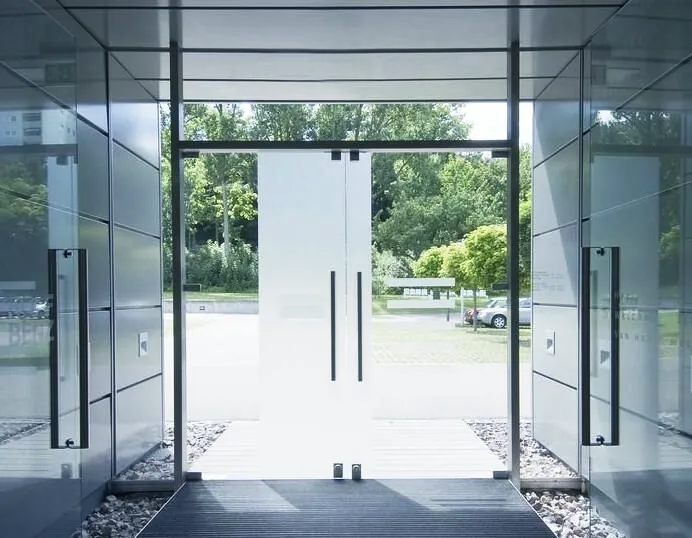
Frameless glass doors generally cost more than framed equivalents. The difference comes down to three specific factors: thicker glass, heavier-duty hardware, and more precise installation labour, not a flat frameless markup.
Why Frameless Glass Doors Typically Cost More
None of the three factors behind the price gap is about the frameless look itself. Each one is a direct engineering consequence of removing the frame. A framed door lets the frame carry most of the structural load; a frameless door has to do that job with glass and hardware alone, and that shifts cost into the parts a framed door doesn't need at the same spec.
Glass Thickness and Hardware
Framed doors distribute structural load through the frame itself, so the glass inside can be thinner. Frameless doors rely on the glass alone for rigidity, which is why 10mm or 12mm toughened glass is standard on a frameless panel. Thicker and heavier than what a framed door typically needs.
Frameless hardware (patch fittings, floor springs, pivot hinges) is specified to the weight of the glass panel rather than fitted generically. That's more involved to source and fit correctly than a standard door frame and hinge set, which adds to the overall cost.
Installation Precision
There's no frame on a frameless door to visually mask a small measurement error, so the opening has to be perfectly square and the glass cut and installed to tighter tolerances. That precision adds installation time and labour, which is reflected in the overall cost rather than in the price of the glass itself.