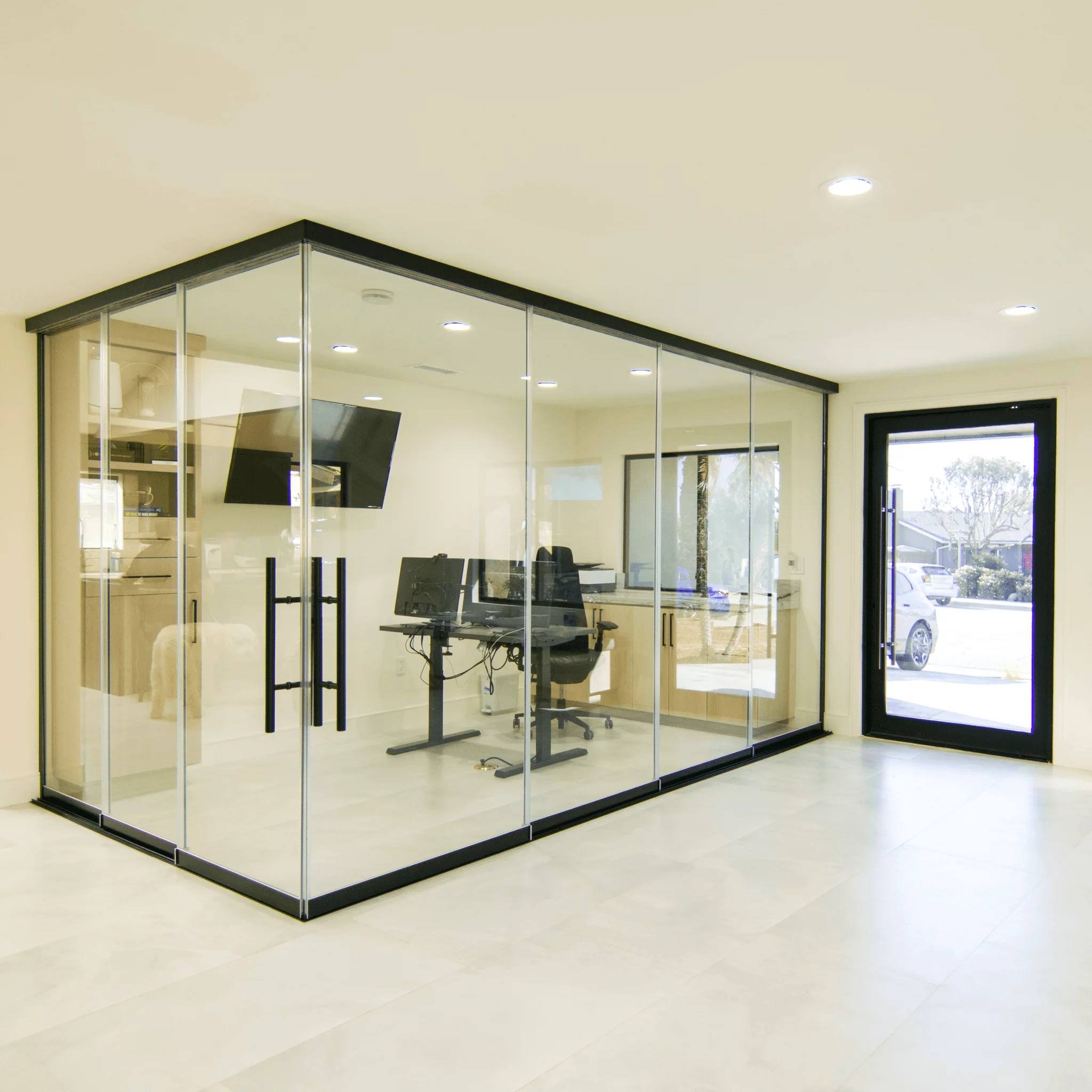
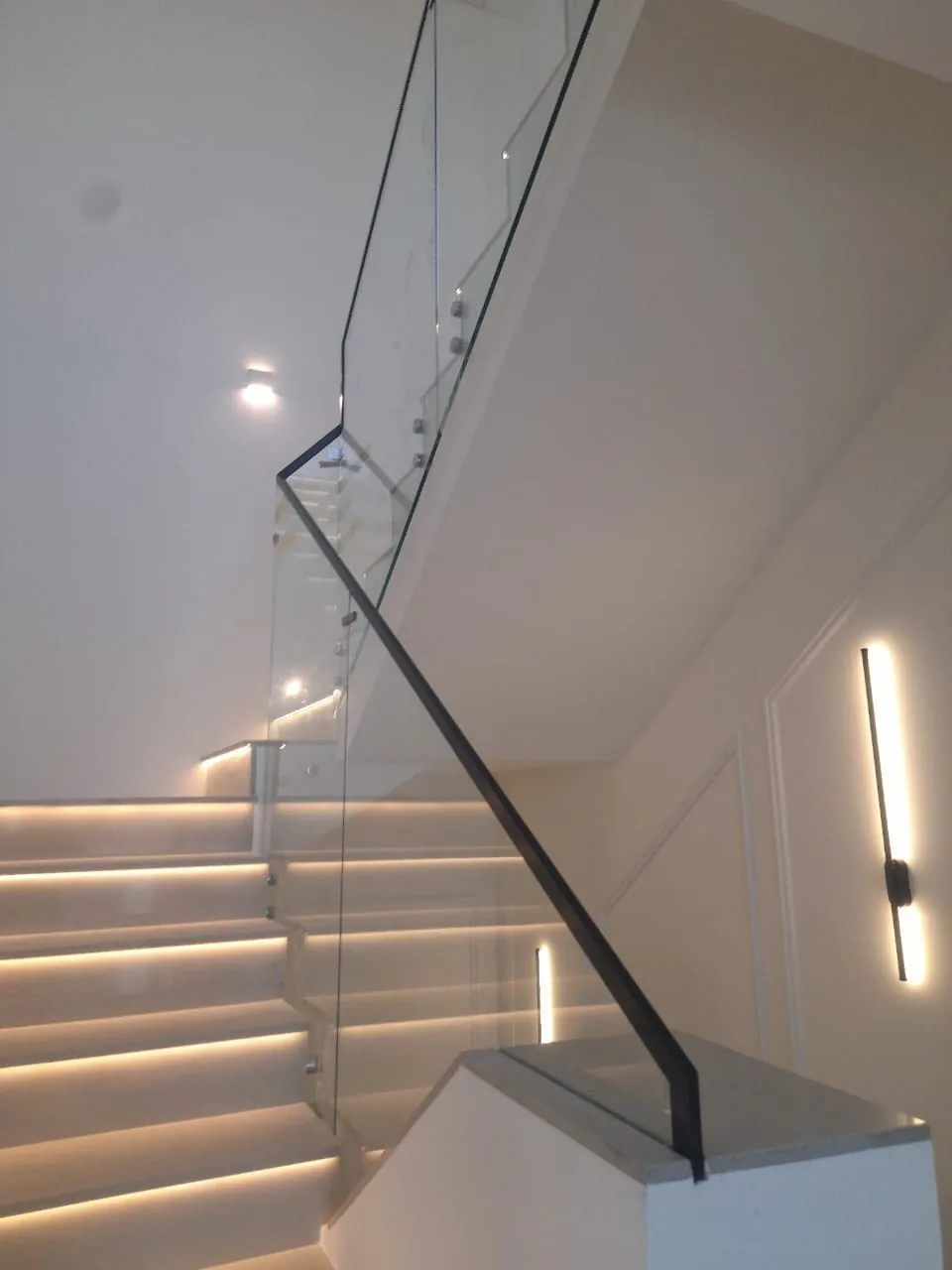
Frameless glass balustrades remove every visible post, rail, and frame from the safety barrier, leaving only the glass itself between you and the view. The two fixing methods that make this possible (spigot/standoff fittings and base channel fixing) each change how the balustrade looks and how it's engineered, and the frameless approach generally calls for a thicker laminated glass build-up than an equivalent framed design.
Spigot & Standoff Fixing
Spigot and standoff fittings are individual metal fixings, bolted to the floor or to the side of a structure at intervals along the length of the glass. Between each fitting, the glass appears to float, with nothing but the small visible spigot breaking the line underneath the panel. This method suits curved runs, angled layouts, and any project where each fixing point may need to adjust independently to an uneven surface.
Base & Channel Fixing
Base channel fixing grips the entire bottom edge of the glass inside a continuous U-shaped channel set into or fixed onto the floor. There are no visible fittings at all, the glass simply rises out of the ground. Because the channel supports the glass continuously along its full width rather than at a few points, it's generally the more forgiving option on long straight runs and taller barrier heights.
Why Frameless Glass Needs to Be Thicker
A framed balustrade shares the structural load between the glass and the surrounding frame or top rail. The frame is doing part of the job of resisting wind pressure and impact. A frameless design removes that support entirely, so the glass has to carry the full load on its own. That's why frameless balustrades are typically specified in a thicker laminated glass build-up than an equivalent framed panel of the same height, and why the fixing detail (spigot spacing or channel depth) is engineered to the specific span and wind exposure of the site, not applied as a generic standard.
The Aesthetic Upside
The reason frameless glass is specified at all, despite the extra engineering, is the view it delivers. With no posts, no top rail, and no visible frame, a frameless balustrade reads as almost nothing at all. The safety barrier is there, but it doesn't interrupt a pool edge, a staircase void, or a balcony line the way any framed alternative eventually does. For villa pools, feature staircases, and view-facing balconies, that uninterrupted sightline is usually the entire point of choosing glass over a conventional railing in the first place. We install exactly that system through our frameless balustrade installation in Dubai.