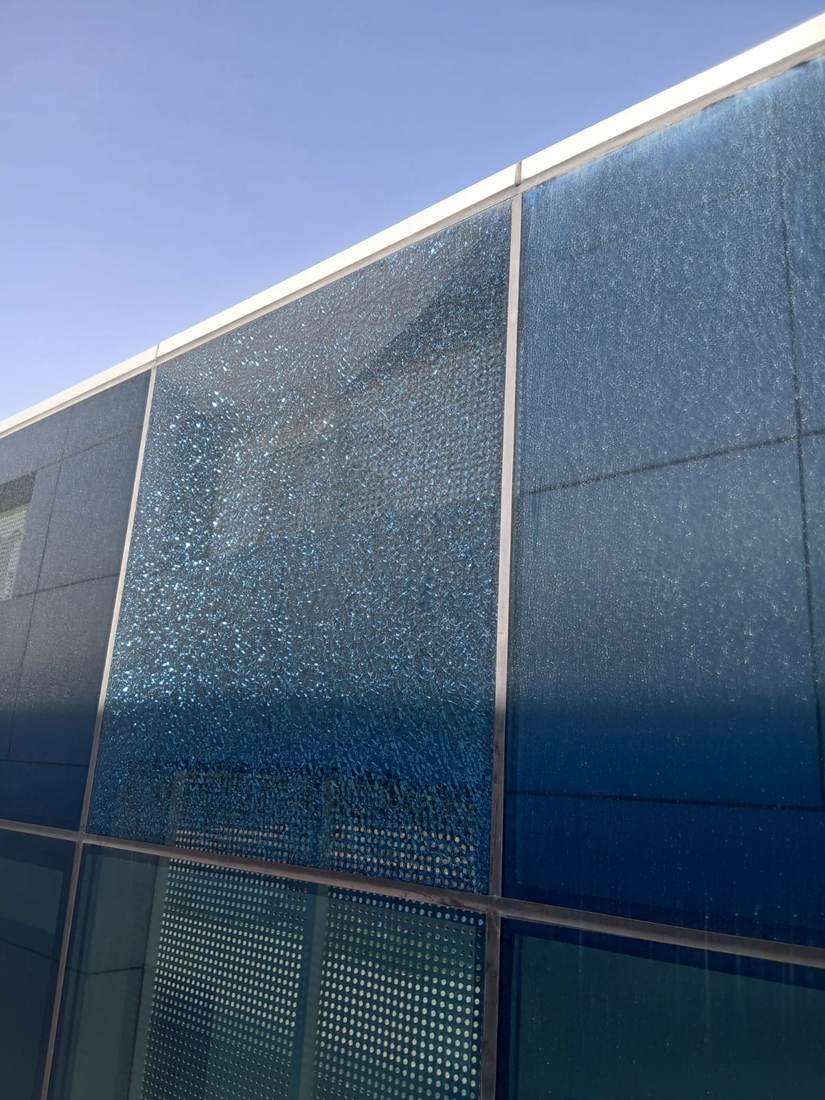
Cracked toughened glass should be treated as needing prompt professional attention, not something to leave until convenient. Toughened (tempered) glass is engineered to shatter into small, relatively blunt fragments if it fails completely, but once it's cracked, that complete failure can happen suddenly, from heat, vibration, or barely any added pressure, with no further warning.
Why a Crack in Toughened Glass Is Different
Toughened glass is put under controlled internal stress during manufacturing specifically so that, if it does fail, it breaks into small granular pieces rather than large sharp shards. That stress is also why a crack changes the picture: once the glass surface is compromised, the internal stress that made it safe when intact can cause the whole pane to fail suddenly and completely, sometimes with no obvious trigger at all. A visibly cracked toughened pane is not a "wait and see" situation.
Laminated Glass Behaves Differently
Laminated glass (built from two or more glass layers bonded around a plastic interlayer) holds together even when cracked, because the interlayer keeps the fragments in place rather than letting the pane let go all at once. It's still compromised and needs professional replacement, but it doesn't carry the same sudden-failure risk as a cracked toughened pane in the same location, which is one reason laminated glass is often specified for overhead glazing and high-traffic areas.
What to Do With a Crack
- Keep the area clear of foot traffic, furniture contact, and anything that could add pressure or vibration until it's assessed.
- Note whether it's toughened or laminated if you know. This changes the urgency, though a professional assessment is the reliable way to confirm.
- Treat a shattered curtain wall panel, shopfront, or door as an emergency, these involve larger panels, higher traffic exposure, and often a security or weatherproofing gap on top of the glass hazard itself.
- Don't attempt to remove or replace it yourself. Cracked toughened glass can fail during handling, and matching the exact glass type and thickness matters for the replacement to perform correctly.