A car shade is close to essential in the UAE: an unshaded vehicle can reach 80°C inside, which destroys dashboards, battery life, leather interiors and paintwork far faster than in almost any other climate. Summer temperatures regularly exceed 45°C and UV radiation stays intense year-round. Whether you own a villa in Dubai, an apartment in Sharjah, or commercial premises in Abu Dhabi, a purpose-built car parking shade is one of the more practical investments a property owner can make.
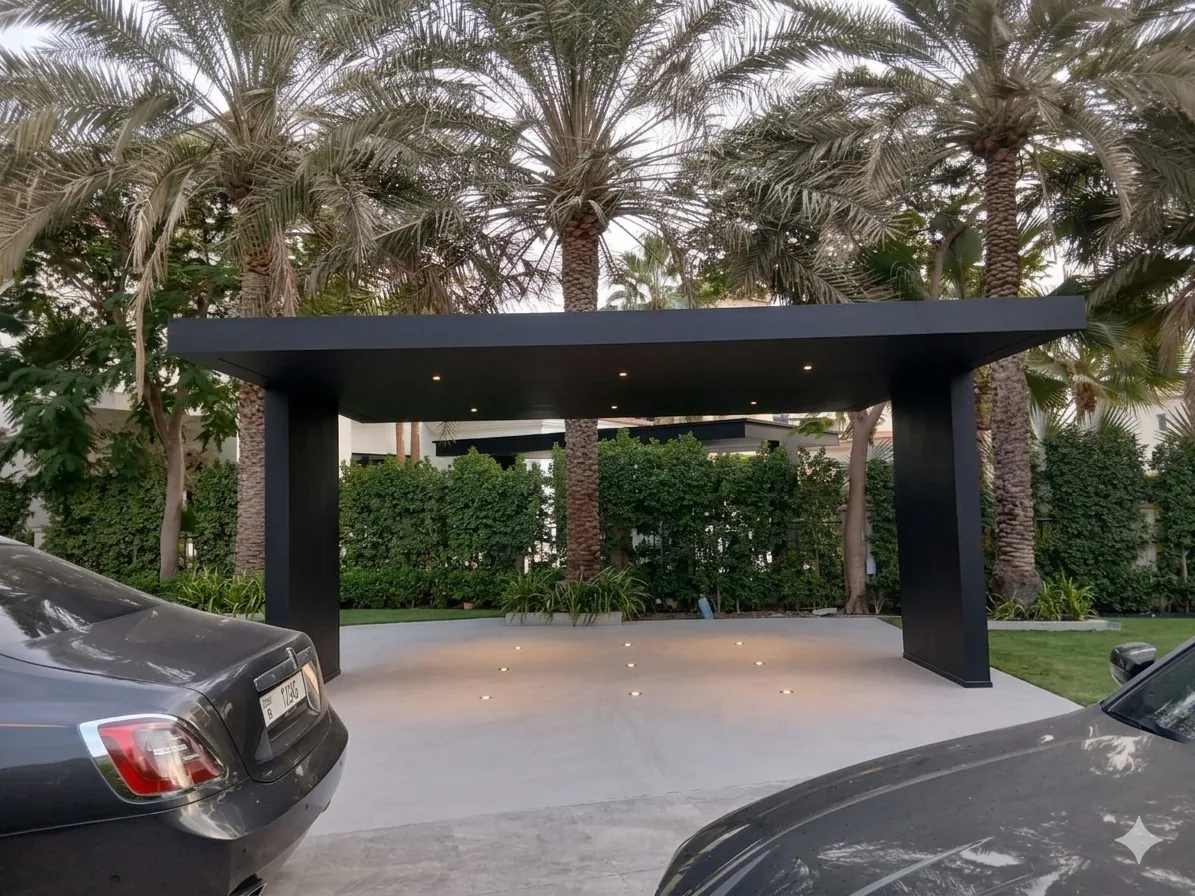
One of our completed projects, a bespoke black powder-coated aluminium car shade at a luxury UAE villa.
Types of Car Shade Structures Available in the UAE
The UAE market offers several types of aluminium car shade structures, each suited to a different budget, aesthetic, and property type.
1. Cantilever Car Shade (Single-Post)
A cantilever design uses a single vertical column on one side, with the roof canopy extending out to cover the vehicle. It is the most popular choice for Dubai villas because it needs minimal footprint and reads as sleek and modern against a contemporary facade. The column is typically finished in powder-coated aluminium in black, white, or silver.
2. Standard Two-Post Carport
Two posts (one on each side) support a flat or pitched roof. This is the most cost-effective car shade structure and is widely used in residential compounds and staff accommodation across the UAE, valued for being simple to install and dependable over years of daily use.
3. Multi-Bay Car Shade
For three or more vehicles, a multi-bay structure uses a row of columns under a continuous roof. It's a common sight in villa compounds, residential buildings, and commercial car parks across Dubai, Abu Dhabi, and Sharjah, with the roof built from polycarbonate sheets, tensile fabric, or aluminium cladding panels depending on the look and budget.
4. Attached Carport
Attached directly to your villa wall or building facade, this type shares one wall of the property as a structural support, which makes it cost-effective and space-saving, a good fit for the narrower plots common in communities like Mirdif, Jumeirah, and Al Ain.
Roof Materials: Polycarbonate vs Tensile Fabric vs Aluminium
The frame is almost always aluminium. It's what varies above it, the car shade roof material, that changes the look, cost, and lifespan of the structure:
- Polycarbonate sheets, translucent or tinted, lightweight, lets light through, good UV protection. Most popular in UAE residential projects. Lifespan: 10–15 years.
- Tensile PVC fabric, curved or sail-style designs, modern aesthetic, excellent heat deflection. Requires tensioning and periodic re-tensioning. Common in commercial and hospitality settings.
- Aluminium composite panel (ACP), fully opaque, very durable, premium look. Used in high-end villas and commercial shade structures where aesthetics matter most.
- Mild steel with powder coating. Heavier and cheaper, but requires anti-rust treatment. Less common in coastal UAE areas due to salt air.
Do You Need a Permit for a Car Shade in Dubai?
In most cases, yes. Dubai Municipality, DDA (Dubai Development Authority), and community master developers such as Emaar and Nakheel all require approval for permanent structures. A licensed contractor handles this process on your behalf, and at Diamond Step® we manage all NOC applications as part of the project scope, so you are not left chasing a government department yourself.
How to Choose the Right Car Shade Contractor in UAE
With hundreds of contractors advertising car shades in Dubai, here is what actually separates a quality installation from a cheap one that will need replacing in a few years:
- Verify their UAE trade licence is current and covers aluminium fabrication works
- Ask to see completed projects and client references
- Confirm they fabricate in-house, subcontracted fabrication reduces quality control
- Get a written warranty on both materials and workmanship
- Ensure they handle all municipality permits and approvals